Impulse Pro Signals Strategy on 1 Minute: Pullback Candle Entry for Pocket Option
Manual trading on the Impulse Pro trend bot on M1: default settings (MACD 12/26/9, RSI 14, EMA 50 filter), expiration at candle close via the flag mode, and the author's main trick — skip the first signal and enter from the pullback candle or a level. Risk per trade, pauses between series and a breakdown of the recording.
Contents
The video was recorded during the New Year holidays of 2026. Nick shows how he trades by hand on the signals of the Impulse Pro trend bot: he does not click on every signal, but waits for a candle against it and enters at a better price. Below are the bot settings, entry rules, risk management and what the day's trade log shows.
Impulse Pro settings
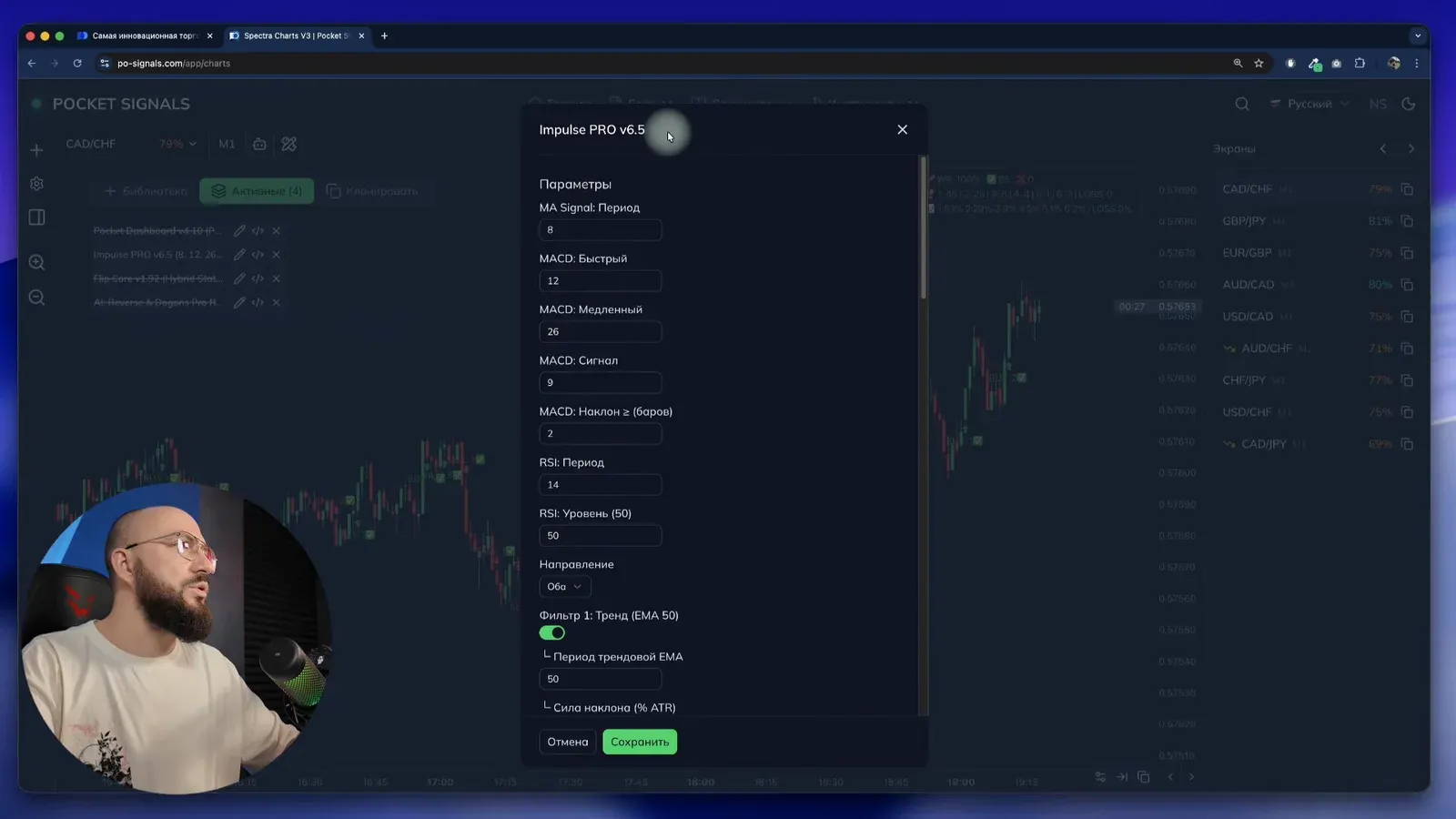
The author changed nothing: all parameters are at their defaults. The bot builds a signal from three conditions and filters it by trend.
| Parameter | Value | Role |
|---|---|---|
| MA Signal, period | 8 | fast signal moving average |
| MACD | 12 / 26 / 9 | momentum of the move |
| MACD slope | at least 2 bars | cuts signals without acceleration |
| RSI, period | 14 | strength confirmation |
| RSI, level | 50 | above 50 buys, below 50 sells |
| Direction | both | |
| Filter 1: trend | EMA 50, on | signals only in the EMA direction |
| Slope strength | % ATR | sensitivity of the trend filter |
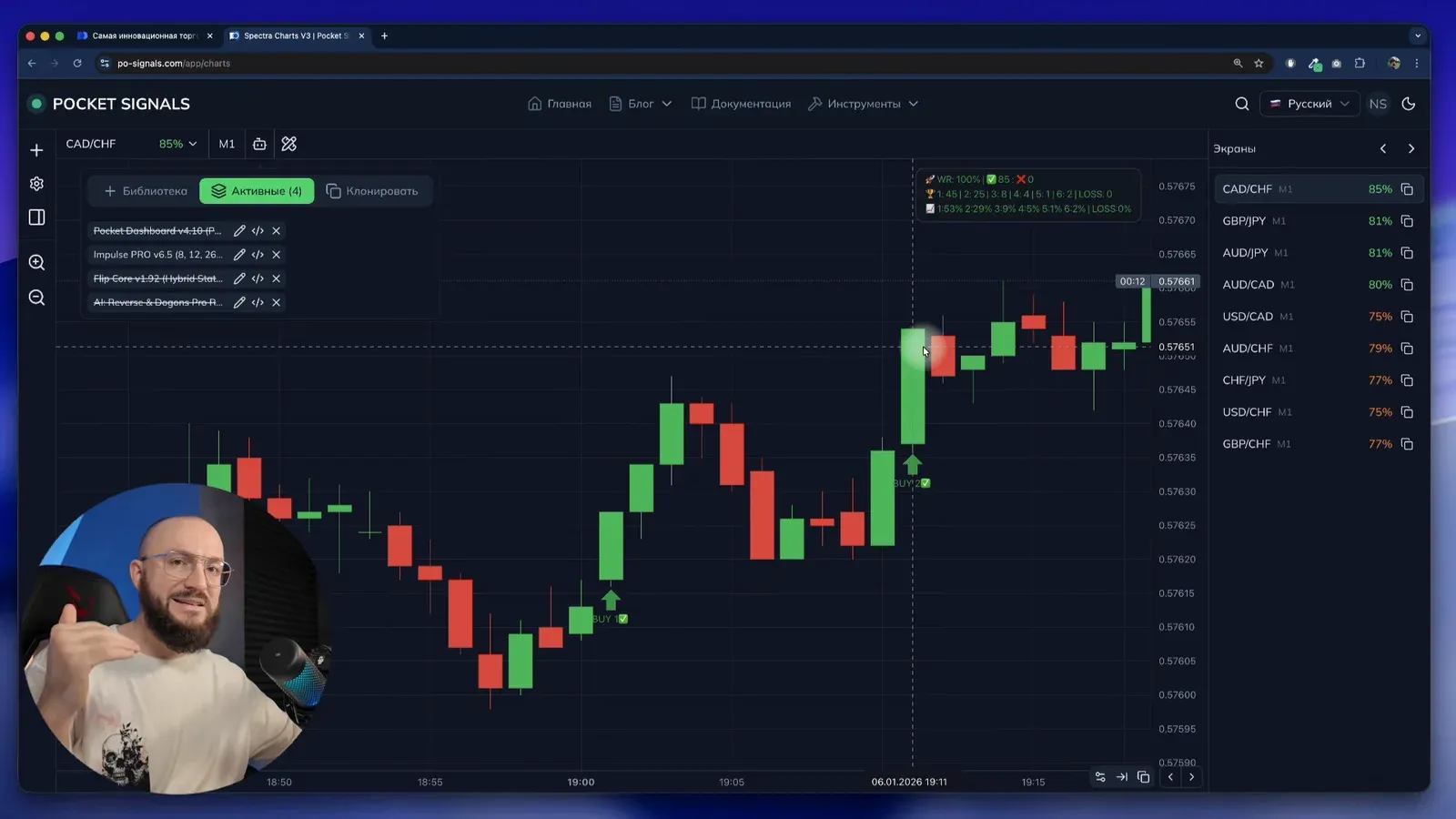
Timeframe M1. The statistics card in the corner of the chart shows the win rate per asset with recoveries included; the bot settings on the recording allow up to five recoveries. On CAD/CHF the card shows 85 series without a single loss, 45 of them closed by the first trade, 25 by the second, 8 by the third and so on. This is history statistics with five recoveries, not the first-trade win rate, and that is exactly why the author does not enter on every signal.
Impulse Pro and other tools — in BinoView Supercharts
Expiration: the flag instead of the timer
Trades are opened on Pocket Option. Instead of a fixed time the author switches expiration to the flag mode with a one- or two-minute offset: the trade closes exactly at the candle close, not 60 seconds after the click. This way a manual entry inside the candle does not lose the move's time, and the result is counted on the same candle the bot signalled on. The recording uses a +2 offset; the day before the author worked with +1, as the platform changes the available offset.
Entry rules
The bot's basic rule is simple: a BUY signal at the candle close, entry at the open of the next one. The author adds three tricks that make the entry cheaper.
| Situation | Buy | Sell |
|---|---|---|
| Signal and a candle against it | BUY signal, the new candle goes down: buy inside this candle below the bot's price, expiration at its close | SELL signal, the candle goes up: sell above the bot's price |
| Skipping the first signal | the first candle after the signal is red: buy at the open of the next, pullback candle | mirror after a green candle |
| A run of candles against the signal at a level | two or three red candles in a row reach a horizontal level: buy on the new candle expecting a reversal | two or three green candles at resistance: sell |
| Sloped level | a candle touches a rising trendline: buy the bounce on a BUY signal | the trendline is broken downward by a candle body: sell in the breakout direction |
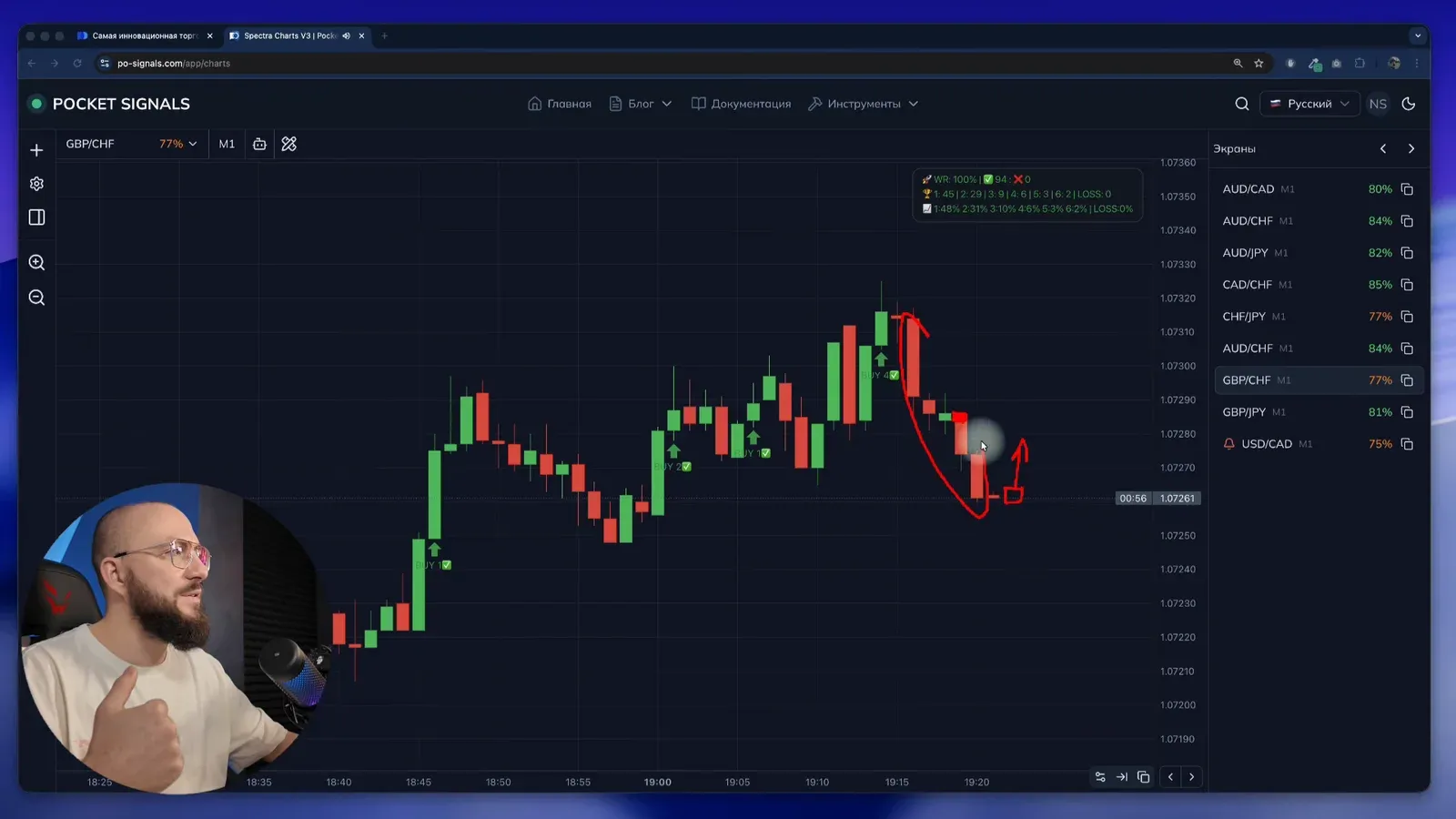
All the tricks share one idea: the bot enters at the candle open, while the trader sees where it went and takes the same trade with a price cushion. Where the bot would close a loss and move to a recovery, a manual entry often closes in profit on the first trade. The bot gives no signals against the trend by EMA 50, so the direction filter is already built in.
Risk and pauses
- Trade size. On the recording 10,000 rubles with a 600–700 thousand deposit. The author calls this excessive risk taken to get back to his usual working deposit of 2 million, where he trades 10–20 thousand. The right size for his account is 8,000, about 1%. Work out yours in the position size calculator.
- Pauses between series. Three or four trades, then a break. This is how the author avoids a prolonged trend or sharp reversal where recoveries stretch to the fifth step. The day before the recording one series reached the fifth loss, and that was almost the whole deposit.
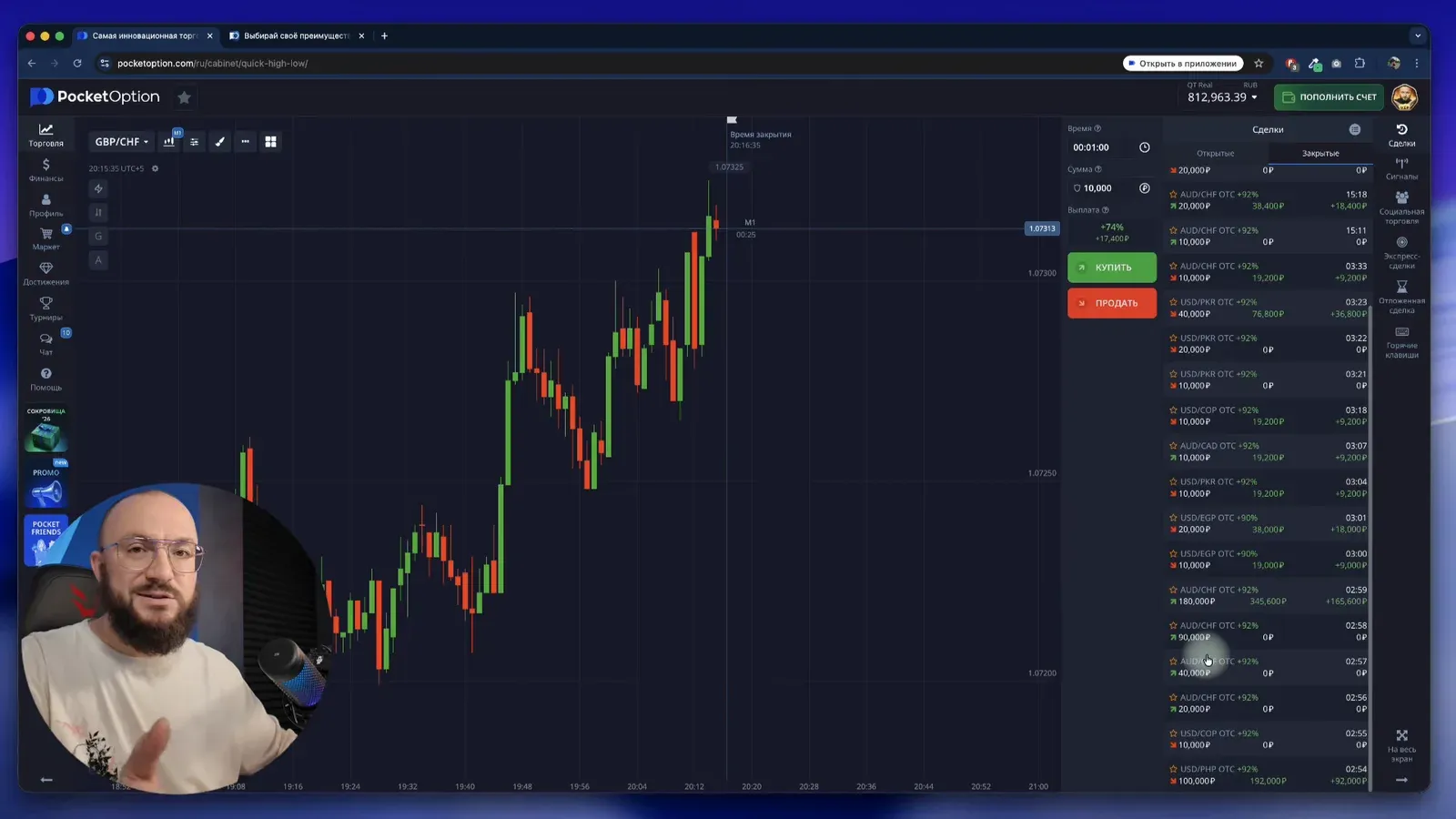
- Few trades per day. The day before, the log shows seven daytime trades and two at night, the last at six in the morning. The author says outright that he does not open 200 trades a day: a reset to zero costs more than missed trades.
What the recording shows
The author does not sum up the Impulse Pro part separately: he shows the day's Pocket Option log with short series, explains on the chart how he would enter from the pullback candle, and opens a few 10,000-ruble trades along the way. The main takeaway is not in the numbers: the strategy works for the author because he reads the chart rather than clicking on signals. He advises beginners to build chart-reading experience on a demo account first and only then carry the tricks over to a real one.
FAQ
Why is an entry from the pullback candle better than on the signal?
The signal appears at the candle close and the bot enters at the open of the next one. If that candle goes against the signal, the entry price for a manual trade gets better: you buy lower than the bot would, and an expiration at candle close gives the move time to come back. Where the bot takes a loss, a manual entry often closes in profit.
How many recovery trades should I take with this strategy?
In the bot settings on the recording five recoveries are enabled, and the statistics card counts the win rate with them included. The author himself advises not to go deep: he calls 10,000-ruble trades on a 600–700 thousand deposit excessive risk, the right size for his account is 8,000, about 1%. After a run of losses a pause is wiser than recovering to the end.
What about the Enigma tool from the second part of the video?
Enigma was the service's first tool and worked only on OTC statistics. It is no longer developed, so this article covers only the Impulse Pro part. Today its role is played by signal bots in BinoView Supercharts with a win rate card right on the chart.